The Silent Attendee: Terms of Engagement for Automated Minute-Taking

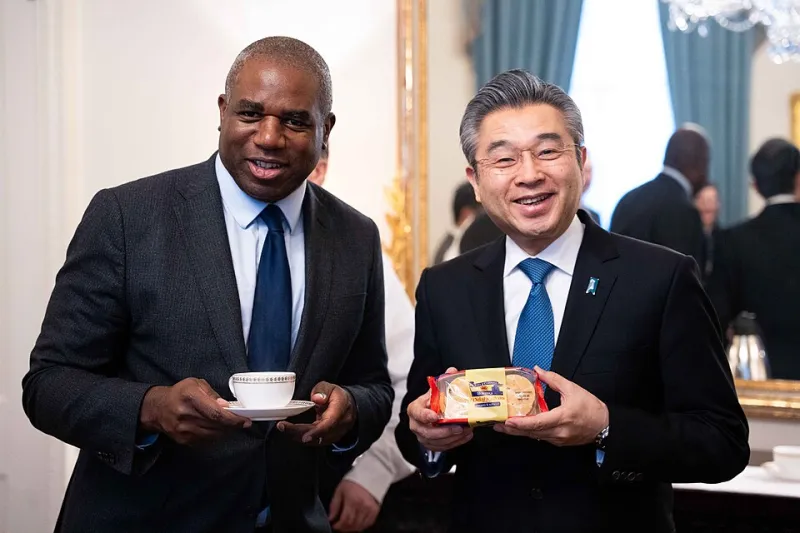
Photo: Benjamin Child bchild311, CC0, via Wikimedia Commons
The microphone arrives before the policy does. In a growing number of UK boardrooms an AI note-taking tool now joins the meeting as an attendee in its own right: it listens, transcribes, summarises and circulates its output within minutes of the chair closing the agenda. In many companies it was adopted on the strength of one director's trial rather than a decision of the board, and the governance questions it raises were never formally asked.
That is not an argument for banning it. Used with discipline, automated transcription improves the texture of minutes, closes the gap between discussion and action, and leaves a searchable record for those who were not in the room. But the record of a board is a legal document before it is a convenience, and the tool that helps produce it deserves the same scrutiny as the processes around it.
The transcript is not the minute
Minutes of directors' meetings must be kept for at least ten years under the Companies Act 2006. They are disclosable, and they are frequently the difference between a decision that can be defended and one that can merely be asserted. A transcript is different in kind: more complete, less considered, and far harder to withdraw once it exists in three inboxes.
Boards should settle three questions in writing before adoption — what is captured, who may retrieve it, and how long it is kept — and should record the answers in the minutes of the meeting that approved the tool. That single act of minute-keeping tends to concentrate minds.
Consent is not a signature at the door
Under UK GDPR, consent must be freely given, specific, informed and unambiguous. In an employment relationship that standard is difficult to meet: a company secretary asked to agree to being recorded by her employer is not operating in a position of free choice, and boards would be unwise to build their lawful basis on consent for staff attendees. A documented legitimate-interests assessment — purpose, necessity, proportionality, safeguards and a genuine right to object — is usually the stronger footing.
The harder cases are the people who are not employees. Advisers, prospective non-executives, employee representatives, union officials, auditors and the occasional guest from a lender all sit in the room under different expectations. Each should be told before the meeting that transcription is in use, what happens to the audio, and how to ask for it to be paused. A note buried in the agenda pack is not sufficient; a line in the pre-meeting email is.
Accuracy has to be tested, not trusted
Automated summaries share a characteristic failure: they are fluent. A tool will assign an action to the wrong director, flatten a dissent into consensus, drop the condition attached to an approval, or invent a date with complete composure. Nobody notices, because the prose reads well.
The remedy is a sample test. For three consecutive meetings, have the chair or company secretary compare the generated summary against the human note, scoring four things: named owners of actions, decisions and their conditions, dissent and abstentions, and figures or dates. Two rounds will tell you whether the tool is fit for board use, and the finding belongs in the governance record alongside any other control test.
Moments that must be paused
Some discussions should not be captured at all. Advice given under legal professional privilege is a clear case: the existence of a transcript can itself become a question in later proceedings, even where the content would have been protected. Matters involving named individuals, health or disciplinary questions carry special-category data risks. Price-sensitive information discussed ahead of an announcement deserves a deliberate pause.
The chair needs a single phrase to stop capture, agreed in advance and used without embarrassment. 'We are pausing the recorder' should be as ordinary as asking for the door to be closed.
Two clocks, not one
Statutory retention and operational retention are different things. The audio file is rarely needed once the minutes are approved; the summary may be useful for a quarter; the minutes and the papers behind them must survive for a decade. Boards that keep everything on a single setting accumulate a large, searchable, disclosable corpus of ambient conversation for no governance benefit whatsoever.
The contract matters here too. Where a vendor processes outside the UK, the transfer mechanism and the sub-processor list are board-level questions rather than IT ones, and the answer should be revisited if the provider changes its model or its ownership.
What is never delegated
A tool may draft. It may not decide.
The decision itself, the reason for it, the dissent recorded against it, the declaration of interest made at the start, the judgement about whether a matter is minuted at all: these are the board's own and remain so. A board that cannot say, in a sentence, what it decided and why has not benefited from a better transcript. It has merely postponed the work.
A checklist for the next meeting
- Written board approval for the tool, recorded in the minutes that approved it.
- A documented lawful basis and a completed legitimate-interests assessment.
- Pre-meeting notice to every attendee, including guests and advisers.
- An agreed pause phrase, understood by the chair and the secretary.
- A three-meeting accuracy test, with a named reviewer and a written result.
- Separate retention settings for audio, summary and minutes.
- Confirmation of processing location, sub-processors and the transfer mechanism.
- A named owner for retrieval requests, including subject access and litigation holds.
None of this is exotic. It is the ordinary discipline a board applies to any system that touches its record — applied, for once, before the subscription renews rather than after a transcript turns up in a disclosure bundle.